Winning the search war now depends less on keywords and more on what strangers are saying about you on Reddit
For nearly two decades, SEO has been the backbone of digital visibility. If you ranked well on Google, you earned the click and often the customer. But the landscape has shifted dramatically. AI-powered search—ChatGPT, Gemini, Perplexity, Claude—is no longer a novelty. It’s becoming the primary way people discover products, services, and answers online. At Evolve Media, we’re watching this shift unfold across industries, and the truth is clear: the old SEO playbook is no longer enough. Visibility today is less about ranking first and more about becoming the source AI trusts.
Don’t abandon tradition
Despite the hype, traditional SEO fundamentals still matter. Fast-loading pages, clean architecture, schema markup, and crawlable content remain essential. Even AI-driven search engines rely heavily on the open web to validate and cross-reference information. But AI doesn’t reward the same signals Google does. It isn’t looking for the most optimized page—it’s looking for the most useful, human, and context-rich information. This is the next era of SEO, not the end of it.
One of the biggest shifts is the rise of user-generated content as a primary authority signal. For years, a single backlink from a high-authority site could move rankings. Today, AI models lean heavily on mass consensus rather than isolated authority. Reddit threads, G2 reviews, Quora answers, and niche forums have become the sources AI trusts most because they offer firsthand experience, specificity, and ongoing conversation. Brands that want to stay visible must engage where their customers already talk, encourage authentic reviews, and participate in public discussions. If people aren’t talking about you, AI won’t either.
Structure matters
Another major change is how content must be structured. AI models extract information differently than search engines and respond best to content that is easy to skim and understand instantly. Clear subheads, concise sections, FAQs, and explicit summaries help AI interpret and elevate your content. We now design pages with AI readability as a core requirement, not an afterthought.
Contextual detail has also become essential. AI searchers don’t type generic product terms anymore. They describe scenarios, intentions, environments, and preferences. AI responds best to content that mirrors this level of specificity. Brands must include use cases, fit notes, environmental conditions, comparisons, and persona-driven context. What once felt overly detailed is now exactly what AI needs to deliver accurate recommendations.
Different tactics for different AIs
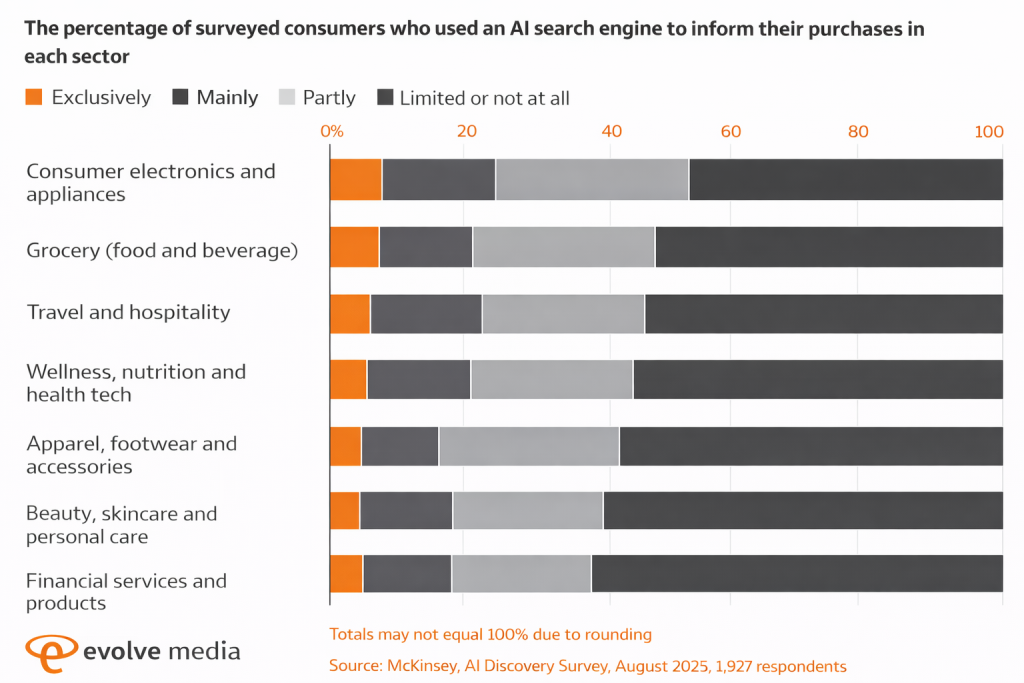
Complicating matters further, every AI platform has its own rules. In the old SEO world, optimizing for Google meant you were also optimizing for Bing, Yahoo, and everyone else. That’s no longer true. ChatGPT leans heavily on Reddit and consumer forums. Gemini pulls more from YouTube and broader content sources. Perplexity favors authoritative, well-structured first-party content. Claude tends to prioritize clarity and educational value. Even within industries, different platforms elevate different sources. E-commerce tends to surface social chatter, while fintech rewards first-party expertise. This fragmentation means brands must diversify their content ecosystem rather than rely on a single channel.
Consider sponsored content
One surprising development is the growing influence of sponsored content. Traditional search engines downrank sponsored articles, but AI models often treat them the same as editorial sources. We’re seeing AI responses cite sponsored content without distinguishing it, which creates a powerful opportunity for brands to shape the narratives AI associates with them—provided the content is authentic, valuable, and well-crafted.
Get ready to adapt
The pace of change is also unprecedented. Google updates its algorithm a few times a year. AI models update every couple of weeks. What works today may not work next month, and reverse-engineering AI behavior is nearly impossible. The brands winning right now are the ones focused on quality, clarity, and genuine customer value—not loopholes or hacks.
Embrace uncertainty
All of this introduces a level of uncertainty that marketers aren’t used to. AI search results vary dramatically from user to user, and two identical prompts can produce entirely different sources. Traditional SEO metrics—rankings, impressions, click-through rates—are becoming less meaningful. Instead, brands must pay attention to broader indicators: how often they’re mentioned across platforms, the volume and sentiment of reviews, engagement in community spaces, visibility in AI-generated answers, and the strength of their first-party content. The new search landscape is fluid, personalized, and unpredictable, but it’s also full of opportunity for brands willing to adapt.
AI is rewriting the rules of search right now. At Evolve Media, we’re helping brands shift from asking how they can rank to asking how they can become the source AI trusts. That means sparking real conversations, structuring content for both humans and machines, and building authority across the entire digital ecosystem. The brands that embrace this new reality will define the next decade of search. The ones clinging to old tactics will fade quietly into the background.